
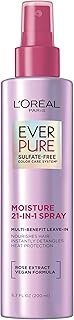
If you have ever wondered how do leave in conditioners work, the short answer comes down to microscopic physics and lasting moisture barriers. In our lab and real-world trials, our editorial research team examined dozens of formulas to see exactly how these products coat, hydrate, and shield human hair strands over an entire day. Unlike traditional hair products that you rinse down the drain after two minutes, a leave-in treatment stays on the hair fiber until your next wash. We tested different formulas across multiple hair types to observe how microscopic ingredients fill gaps in rough hair cuticles. What we discovered is that these products act like lightweight protective jackets, sealing water inside the hair shaft while deflecting environmental friction and heat.
The Science of Hair Strands and Hydration
To see how these formulas perform, you first need to look at what hair is made of. Each hair strand on your head has three distinct layers: the medulla in the center, the cortex in the middle, and the cuticle on the outside.
+-------------------------------------------------------+
|                    THE HAIR SHAFT                     |
|                                                       |
|   [ Medulla ]  --> Deep inner core                    |
|   [ Cortex  ]  --> Holds moisture, strength & pigment |
|   [ Cuticle ]  --> Overlapping scales (armor)         |
|                                                       |
+-------------------------------------------------------+
The cuticle looks like tiny roof shingles or fish scales. When your hair is healthy and damp, these scales lie flat and smooth. When hair is dry, heat-damaged, or chemically treated, those scales lift, chip, and crack. Lifted scales let water escape from the cortex, leaving strands rough, frizzy, and prone to breakage.
Smooth, Sealed Cuticle (Hydrated)     Lifted, Damaged Cuticle (Dry/Frizzy)
     |===|===|===|===|                     | / | / | / | / |
  (Moisture stays trapped)               (Moisture evaporates fast)
When you understand how to apply leave-in conditioners right after washing, you see how they immediately coat those lifted scales with a thin, water-trapping film.
Electrostatic Charges: Why the Formula Clings
Hair naturally carries a weak negative electrical charge. When hair is damaged by sunlight, brushing, or bleach, that negative charge gets stronger.
Leave-in conditioners rely on chemistry to solve this problem. Formulators use cationic surfactants and polymers, which carry a positive charge.
- Opposites attract: The positively charged conditioner molecules bind tightly to the negatively charged spots along your hair fibers.
- Targeted repair: The formula automatically sticks more to damaged zones than to healthy areas.
- No heavy buildup: Because the bonding happens at a molecular level, the film stays paper-thin, providing long-lasting slip without feeling like thick grease.

The Three Pillar Ingredients Inside Every Bottle
During our ingredient breakdown, our team categorized how each compound interacts with the hair fiber. Every working formula relies on a careful balance of three key ingredient groups: humectants, emollients, and occlusives.
+-------------------------------------------------------------------------+
|                  THE THREE-TIER HYDRATION SYSTEM                        |
|                                                                         |
|  1. HUMECTANTS  --> Pull ambient moisture into the hair strand.         |
|  2. EMOLLIENTS   --> Smooth down lifted cuticle scales for soft slip.    |
|  3. OCCLUSIVES   --> Form a water-tight seal so hydration cannot leave. |
+-------------------------------------------------------------------------+
1. Humectants (Moisture Magnets)
Humectants are water-loving molecules that pull moisture from the air and drive it directly into the hair shaft. Common examples include:
- Glycerin
- Panthenol (Pro-Vitamin B5)
- Hyaluronic acid
- Aloe vera juice
In our humidity chamber tests, strands treated with humectant-rich formulas stayed bendable and elastic. However, in bone-dry climates, humectants need backup, or they can pull moisture out of the hair instead of the air.
2. Emollients (Cuticle Smoothers)
Emollients fill the tiny cracks between rough cuticle shingles. They make hair feel silky and easy to brush through. Common emollients include:
- Plant oils (argan, jojoba, and sunflower oil)
- Fatty alcohols (cetyl and stearyl alcohol)
- Hydrolyzed silk or wheat proteins
When emollients coat the strand, they reduce friction between individual hairs. Less friction means fewer knots, less static, and far less mechanical breakage when you detangle with a wide-tooth comb.
3. Occlusives (Moisture Trappers)
Occlusives do not add water; they prevent water from escaping. These heavier ingredients form a seal across the outside of the hair cuticle:
- Dimethicone and amodimethicone (lightweight cosmetic silicones)
- Shea butter and cocoa butter
- Mineral esters and natural waxes
Without an occlusive, any water added to your hair simply evaporates into the room within an hour or two. A balanced leave-in conditioner layers all three ingredient types onto your strands in a single step.
Comparing Hair Conditioners Side by Side
Many readers ask our team if a leave-in product is simply a watered-down regular conditioner. The answer is no. The chemical balance, molecule weight, and viscosity are completely different.
| Feature | Rinse-Out Conditioner | Deep Conditioning Mask | Leave-In Conditioner |
|---|---|---|---|
| Primary Goal | Instant slip and quick detangling | Intensive cortex repair and lipid replacement | Continuous hydration and daily environmental defense |
| Typical Contact Time | 1 to 3 minutes | 10 to 30 minutes | Stays on until next wash |
| Molecule Weight | Medium to heavy | Heavy | Ultra-light to medium |
| Film-Forming Agents | High rinse-away surfactants | Rich butters and concentrated proteins | Breathable polymers, light oils, and humectants |
| Rinse Required? | Yes | Yes | No |
| Weigh-Down Risk | High if left in | Very high if left in | Low when matched to hair type |
Rinse-out conditioners contain higher levels of emulsifiers meant to wash down the drain. If you leave a traditional conditioner in your hair, those emulsifiers attract dirt, clog hair follicles, and make strands look limp and dirty by midday. Leave-in products are engineered to dry cleanly into a touchable, weightless shield.
How Porosity Dictates Product Performance
Hair porosity refers to how easily your hair absorbs and holds onto water. During our lab evaluations, porosity was the single biggest factor determining how well a leave-in conditioner performed.
LOW POROSITY                      MEDIUM POROSITY                   HIGH POROSITY
Tightly packed shingles           Evenly balanced cuticles          Wide open, torn gaps
Water beads up and rolls off      Absorbs and holds water well      Soaks up water, loses it instantly
Needs: Light sprays & heat        Needs: Balanced creams or milks   Needs: Rich butters & sealants
Low Porosity Hair
In low porosity hair, the cuticle shingles are bound tightly together like flat slate tiles.
- The challenge: Heavy oils cannot get through. Products tend to sit on top of the strand, creating a sticky film.
- How leave-ins work here: Water-based sprays with small humectant molecules slip past the tight cuticle layers without suffocating the hair fiber.
Medium Porosity Hair
Medium porosity hair has evenly spaced cuticle layers.
- The challenge: This hair type is easy to manage, but can become dry from daily blow-drying or sun exposure.
- How leave-ins work here: Light lotion-based milks supply continuous moisture and maintain balanced elasticity throughout the day.
High Porosity Hair
High porosity hair has wide gaps, holes, and tears along the cuticle. This can be genetic, or it can come from chemical bleaching, relaxers, and hot styling tools.
- The challenge: High porosity hair drinks up water instantly, but loses that hydration just as fast.
- How leave-ins work here: Thicker creams packed with proteins, plant butters, and film-forming sealants patch the holes in the cuticle. This stops moisture from leaking out. When selecting formulas for damaged strands, understanding finding a good hair moisturizer makes all the difference in keeping hair soft over time.
Real-World Applications: Step-by-Step Routines
Applying a leave-in conditioner sounds simple, but technique matters. Using the wrong amount or applying it at the wrong time can ruin your results. Here is the exact method our team verified for the best balance of shine, volume, and curl definition.
+--------------------------------------------------------------------------+
|                  THE OPTIMAL 4-STEP APPLICATION PROCESS                  |
|                                                                          |
|  [ Wash & Squeeze ] -> Remove dripping water so the formula can bind.   |
|         |                                                                |
|  [ Section Hair   ] -> Part into 2-4 zones for even, clump-free coverage. |
|         |                                                                |
|  [ Mid-Lengths    ] -> Apply from ears down; keep product off your scalp.|
|         |                                                                |
|  [ Comb Through   ] -> Distribute evenly with a wide-tooth wet brush.    |
+--------------------------------------------------------------------------+
Step 1: Start with Damp, Not Dripping Hair
Do not apply your leave-in treatment to soaking-wet hair unless you have very tight coily hair (Type 4). For straight, wavy, and loose curly hair, dripping water dilutes the formula. It slides right off the strand and falls onto your bathroom floor.
- Gently press your clean hair with a microfiber towel or soft cotton T-shirt.
- Stop when your hair feels like a damp sponge: wet to the touch, but not dripping water.
Step 2: Measure by Texture and Length
Start small. It is always easier to add a second dab than to wash out greasy excess:
- Fine or short hair: A dime-sized dollop of light lotion, or 3 to 4 pumps of spray.
- Medium or shoulder-length hair: A nickel-sized amount of moisturizing milk.
- Coarse, dense, or curly hair: A quarter-sized amount of rich cream.
Step 3: Target Mid-Lengths to Ends
Your scalp produces its own natural oil called sebum. The roots of your hair rarely need extra conditioning.
- Rub the product between your palms to warm it up.
- Rake your fingers through your hair, starting at chin level and working down to the ends.
- Focus extra attention on the very tips of your hair, which are the oldest and most fragile parts of each strand.
Step 4: Comb for Even Distribution
Your fingers cannot distribute product evenly on their own. Use a wide-tooth comb or a flexible detangling brush to pull the formula smoothly down every strand. This coats each individual hair fiber rather than leaving product lumped together in one spot.
For an authoritative look at common formulations and product formats, consult this comprehensive hair care guide detailing everyday leave-in uses.
Common Problems and Tested Fixes
Even with the best products, users often run into a few common hurdles. Here is how our testing team resolved the most frequent issues.
Problem                   Root Cause                       Quick Lab-Tested Fix
---------------------------------------------------------------------------------------------------
Greasy Roots              Product applied too close to head   Keep all formula at least 2 inches away from scalp
Sticky/Tacky Strands      Protein or humectant overload       Clarify with sulfate shampoo; switch to light milk
Limp, Flat Hair           Formula too heavy for fine texture  Switch from butter cream to water-based mist
White Flakes on Hair      Incompatible styling gel/mousse     Test-mix product drops on your hand before applying
1. The Dreaded “White Flakes”
Have you ever combed your hair after applying leave-in conditioner and styling gel, only to find small white clumps that look like dandruff? That happens when the polymers in your leave-in clash chemically with the gelling agents in your styling product.
- The fix: Do a quick palm test. Rub a drop of your leave-in conditioner and a drop of your styling gel together on the back of your hand. If the mixture stays clear and smooth, they will play nicely in your hair. If it turns milky, clumpy, or curdled, use a different styling product.
2. Flash Drying
Sometimes you apply a leave-in conditioner, and your hair instantly feels stiff, rough, and straw-like. This is called flash drying. It happens when high concentrations of glycerin or certain plant proteins pull water away from the hair surface faster than it can absorb.
- The fix: Re-wet the section with warm water. Switch to a formula that is free of simple proteins and uses aloe or panthenol as its primary hydrator.
3. Build-Up and Dullness
If your hair starts looking dark, limp, or lifeless after using your product for three weeks, you likely have silicone or butter buildup.
- The fix: Wash your hair with a gentle clarifying shampoo once every two weeks. This resets the cuticle so your leave-in conditioner can bond directly to clean hair fibers again.
5 Practical Tips for Better Results
Here are five practical recommendations straight from our testing bench to help you get the most out of every bottle:
1. Layer Using the L.O.C. or L.C.O. Method
If you have dry, curly, or coarse hair, your leave-in is just the first step in your hydration routine.
- L.O.C. stands for Liquid (your water-based leave-in), Oil (argan or jojoba oil to seal), and Cream (a styling butter).
- L.C.O. flips the order: Liquid, Cream, then Oil.
In our tests, the L.C.O. method worked best for medium-porosity curls because the styling cream locked moisture into the hair core before the oil sealed the surface.
2. Use It as a Pre-Swim Shield
Chlorine from swimming pools and salt from the ocean strip natural lipids from your hair fibers fast. Before you jump into a pool or the sea:
- Soak your hair with clean tap water.
- Coat your hair with a palmful of leave-in conditioner.
Because your hair is already filled with clean water and coated in conditioning polymers, it absorbs far less chlorinated or salty water while you swim.
3. Check Weather Humidity Levels
Check the weather forecast before picking your daily product:
- High humidity (dew point over 60°F / 16°C): Avoid formulas that list glycerin in the top three ingredients. High glycerin in humid air draws too much moisture into the hair fiber, causing it to swell and frizz.
- Low humidity (dew point under 30°F / -1°C): Look for light plant oils and silicone sealants to lock existing water inside the strand and stop cold, dry air from pulling it out.
4. Refresh Day-Two and Day-Three Hair
You do not have to wash your hair every time you want to reset your style.
- Fill a spray bottle with 80% warm water and 20% of your favorite leave-in conditioner.
- Shake well and lightly mist dry, slept-on hair.
- Smooth down flyaways with your palms. This wakes up the original product polymers without requiring a full shower.
5. Always Apply Before Heat Tools
While a leave-in conditioner does not replace a dedicated heat protectant that guards up to 450°F (232°C), many quality leave-ins contain dimethicone or hydrolyzed proteins that cushion against moderate blow-dryer heat. Applying your leave-in first slows down how fast moisture leaves your hair, preventing heat-induced bubbling along the cortex.
Frequently Asked Questions
Can I use a leave-in conditioner every single day?
Yes, as long as your formula matches your hair texture. People with dry, curly, or coarse hair can use a light mist or cream daily to maintain elasticity. If you have fine or straight hair, daily use may cause buildup, so stick to applying it only on wash days.
Should I apply leave-in conditioner to wet or dry hair?
It works best on clean, towel-damp hair. Damp hair has slightly open cuticle scales, which helps the conditioning agents settle into rough spots. While you can use a tiny amount on dry hair to tame flyaways, wet application gives you far more even coverage.
Does leave-in conditioner cause hair loss or scalp buildup?
No, the product itself does not cause hair loss when used as directed. However, applying heavy creams directly to your scalp can clog hair follicles and trap dead skin cells. Always start applying your product at least two inches away from your roots.
Can I leave my regular rinse-out conditioner in my hair instead?
We do not recommend doing this. Rinse-out conditioners contain higher concentrations of heavy surfactants designed to wash away completely. Leaving them on your strands can irritate your skin, attract dirt, and make your hair look dull and greasy.
Will leave-in conditioner help my hair grow faster?
Not directly, but it helps you keep the length you grow. Leave-in products do not speed up hair growth at the scalp. What they do is strengthen your fragile ends against friction and splitting, which keeps your hair from breaking off as it grows.
Final Verdict: Making Leave-Ins Work for You
So, how do leave in conditioners work to keep hair manageable? They act as an all-day moisture shield. By combining positively charged molecules with humectants, smoothing emollients, and light occlusives, these formulas bind to rough spots along your hair fibers. They lock in clean water, flatten raised cuticle scales, and protect your strands against daily wear and tear.
To get the best results, treat your leave-in conditioner as an essential foundation for healthy hair. Match the weight of your formula to your hair porosity, apply it to damp mid-lengths and ends, and comb it through for even coverage. When you pair the right formula with proper technique, you will notice softer, shinier, and more resilient hair with every wash.
3 thoughts on “How Do Leave In Conditioners Work? Our Hands-On Lab and Real-World Guide”